Complete Eye Care offers the advanced cataract surgery in Gurgaon, performed by best cataract surgeon in Gurgaon Dr. Parul Sony — trained at AIIMS New Delhi and FRCS qualified, with over 25 years of surgical experience. Whether you need standard Phaco surgery or premium Bladeless Laser Cataract Surgery (FLACS), our Gurgaon clinic provides a full range of techniques and intraocular lenses (IOLs) under one roof. Cataract surgery is a painless daycare procedure — you go home the same day with dramatically clearer vision. Over 29,000 patients have trusted Complete Eye Care for their eye health.
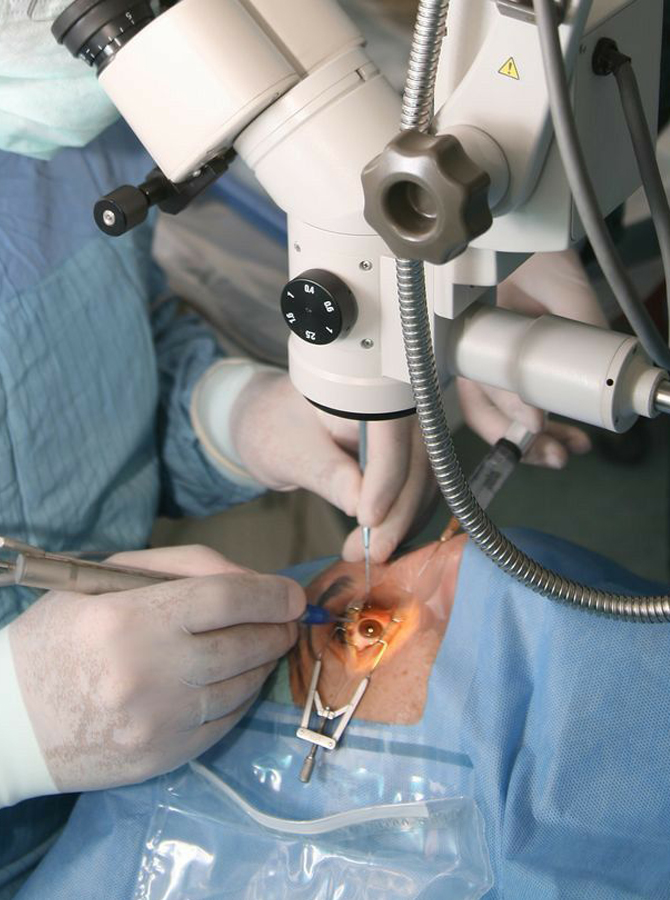 A cataract is a condition where the natural lens in the eye becomes cloudy and hard and are usually a part of normal aging process. If the blurred vision due to cataract is disturbing your daily lifestyle, the cataract may need to be removed.
The latest technique of cataract removal is Femto-Second Laser Assisted Blade-Less Cataract Surgery also popularly known as Robotic Cataract Surgery. The laser is accurate to the level of 5 microns thereby enhancing its precision, safety and visual outcomes over regular phaco surgery. Here we learned about the cataract surgery and the top cataract specialist available in Gurugram.
The lens is a transparent structure which transmits light, which in turn is focused on the retina, similar to a camera. The picture so formed on the retina is then sent to the brain via a nerve to complete the process of seeing. When this lens starts becoming opaque or white, the problem is labelled as cataract. The condition happens when certain proteins in the lens form into abnormal clumps. These clumps gradually enlarge and interfere with vision by distorting or blocking the passage of light through the lens.
So when the lens is partially opaque, it is called an immature cataract and some light can pass through to help perform some routine functions. However, when the opacity increases to engulf the entire lens, vision is totally cut off and the cataract is called mature.
There is a painless gradual decrease in vision. Early cataract is associated with difficulty in reading in normal light conditions, and extra illumination is required. Excessive glare and reduced sharpness can make night driving difficult. Some experience a rapid changes in the number / power of glasses. In advanced cases there is complete loss of sight and lens becomes pearly white in colour.
If you experience any of the following issues, schedule an appointment with your eye doctor immediately:
At Complete Eye Care, we offer the best and most advanced treatment options for cataract with best cataract surgeon and facilities in Gurgaon.
Choosing a cataract surgeon is one of the most important decisions you will make for your eye health. Here is what sets Dr. Parul Sony apart:
1. AIIMS Training, Global Qualification Dr. Parul Sony completed her MD in Ophthalmology from AIIMS New Delhi — India's most prestigious medical institution — and holds the FRCS (Fellow of the Royal College of Surgeons), an internationally recognised surgical qualification. This dual credentialing reflects both clinical depth and global standards of care.
2. 25+ Years of Surgical Expertise With over two and a half decades of specialised eye surgery experience and more than 29,000 successful procedures, Dr. Sony brings a level of technical mastery that is difficult to find in a single-surgeon practice.
3.
Full Spectrum of Techniques Under One Roof From conventional phacoemulsification to the most advanced Femto-Second Laser Assisted Cataract Surgery (FLACS), patients receive the right procedure for their specific condition — not a one-size-fits-all approach.
4.
Complete IOL Range — No Compromise on the Lens The intraocular lens (IOL) implanted during cataract surgery is just as important as the surgery itself. Complete Eye Care offers the full range — Monofocal, Multifocal, Trifocal, Toric, and EDOF lenses — from globally trusted brands, so patients are never limited in their choices.
5. Transparent Pricing, Honest Consultation Before recommending any procedure, Dr. Sony conducts a thorough eye examination. Surgery is advised only when clinically necessary — not driven by commercial interest.
Cataract is an aging process, developing around the age of 40 and intensifies by the time an individual attains the age of 50 to 60. It is also caused by eye-trauma, long-term diabetes, corticosteroid medications or radiation treatments.
Sometimes newborn babies can also have cataract, which is caused as a result of infections during pregnancy. If left untreated, cataracts might also lead to blindness.
Complete Eye Care is one of the best cataract surgery hospitals in Gurgaon where experts provides a range of techniques tailored to each patient's needs, lens density, and lifestyle goals.
1. Phacoemulsification (Phaco) Surgery The gold-standard technique used globally. A tiny ultrasound probe breaks up the cloudy lens into fragments, which are then gently suctioned out. A foldable artificial lens is inserted through the same micro-incision. No stitches are required. Recovery is quick and vision improves within 24–48 hours.
2. MICS (Micro Incision Cataract Surgery) A refinement of standard phaco, MICS uses an even smaller incision — reducing inflammation, speeding recovery, and minimising the risk of surgically-induced astigmatism.
3. Bladeless Robotic Cataract Surgery — FLACS (Femto-Second Laser Assisted) The most advanced form of cataract surgery available today. A femtosecond laser — accurate to 5 microns — replaces the manual steps of making incisions and breaking up the lens. The result is unmatched precision, reduced ultrasound energy in the eye, and superior visual outcomes. This technique is especially recommended when premium IOLs such as trifocal or EDOF lenses are chosen, as correct centration of the lens requires laser-level accuracy.
| Feature | Phaco / MICS | Bladeless FLACS |
|---|---|---|
| Incision Method | Manual blade | Femtosecond laser |
| Precision Level | High | Ultra-high (5 micron accuracy) |
| Recommended for | Standard cataracts | Dense cataracts, premium IOLs |
| Recovery Speed | Fast | Fast |
| Suitable IOL Types | All standard | All, especially premium |
A common question patients ask the best cataract surgeon in Gurgaon is: "Do I need laser surgery, or is standard phaco enough?" The honest answer depends on your individual clinical picture.
Standard phacoemulsification is a highly safe and effective procedure for the vast majority of cataract patients. FLACS (Femto-Second Laser) offers additional precision that becomes especially valuable when dealing with a denser or more complex cataract, or when premium IOLs are being implanted where exact positioning is critical.
Dr. Parul Sony will guide you to the right technique after evaluating the grade of your cataract, your corneal measurements, and your visual goals — not based on what is more expensive.
The IOL is the artificial lens implanted inside your eye after the cataract is removed. It stays permanently and determines how well you see after surgery. Dr. Parul Sony helps each patient choose the right lens based on their profession, lifestyle, and vision goals.
Monofocal IOL — Corrects vision for one distance (usually distance). Reading glasses may still be needed post-surgery.
Multifocal IOL — Provides clear vision at multiple distances — near, intermediate, and far — significantly reducing dependence on glasses.
Trifocal IOL — An upgrade on multifocal, offering three distinct focal points for even more natural, glasses-free daily living.
Toric IOL — Specifically designed for patients who have astigmatism (cylindrical power). Corrects both the cataract and the astigmatism simultaneously.
EDOF (Extended Depth of Focus) IOL — Provides a continuous range of vision from distance to intermediate, with fewer halos or glare effects than traditional multifocals. Popular choice for professionals who spend extended time on screens.
There are no eye drops for treating cataract but surgery is the only effective treatment of the it. With the advancement in technology, it is now safer than ever to get your vision corrected with minimal risks to your vision. The cataractous lens is removed and is replaced with an artificial lens. The decision to have surgery depends on the degree to which your vision in impaired. Although some persons with cataracts find that their vision improves by using eyeglasses, magnifying lenses or stronger lighting, the only real way to cure cataracts is by surgery. If cataracts affect both eyes, each eye operation is scheduled and performed separately.
At Complete Eye Care, we offer the best and most advanced treatment options for cataract surgery. We have the entire range of surgical procedures, the most advanced bladeless or the robotic cataract surgery in Gurgaon with best cataract surgeon and facilities in Gurgaon.
Modern phacoemulsification cataract procedure, is a daycare procedure, and takes just a few minutes, the recovery period is also minimal. In the first week after surgery, it generally is recommended that the patient puts regular drops, protects the eye from water and dust or any kind of trauma. A few weeks after the surgery, the patient may be prescribed glasses for near work. The artificial lenses last a lifetime and complications due to the lens are rare and are easily corrected.
There is usually no visible scarring but at times the white of the eye can have any degree of redness
You may go home with an eye pad and shield, or just a shield. The pad can be removed after the first hour. The shield should be worn at night for the first week. The eye may feel gritty and sometimes you may experience some mild headache. These symptoms are common. The discomfort should rapidly improve over the next 24 hours. There should be no worsening of your symptoms. If your discomfort or headache should deteriorate, contact your doctor immediately.
Your vision will normally be much better by Day 2. Sometimes there can be some blurring or misting in the eye, but this should improve over the course of the day. If you feel your vision is becoming more blurred, contact your hospital immediately.
If you take part in a sport that risks a poke in the eye, you should discuss returning to these activities with your surgeon before the operation. You should not go swimming for the first 2 to 4 weeks to minimize the risk of infection. When cycling in the first few weeks following surgery, keep your sunglasses on to reduce the impact of dust.
The cost of cataract surgery in Gurgaon depends on two key factors: the surgical technique used and the type of intraocular lens (IOL) implanted. At Complete Eye Care, we believe in complete price transparency. All costs are per eye and include the surgical procedure, IOL, operation theatre charges, and standard follow-up visits. So connect with us directly. Please visit us for an eye check-up first. After a proper examination, we will be able to give you the exact lump-sum amount.
Faq
If you are searching for the best cataract surgeon in Gurgaon, contact Dr Parul Sony who offers advanced technology, years of experience, and compassionate care. The right surgeon can help you regain clear, comfortable, and confident vision with safe and modern cataract treatment.