
What is diabetic retinopathy?
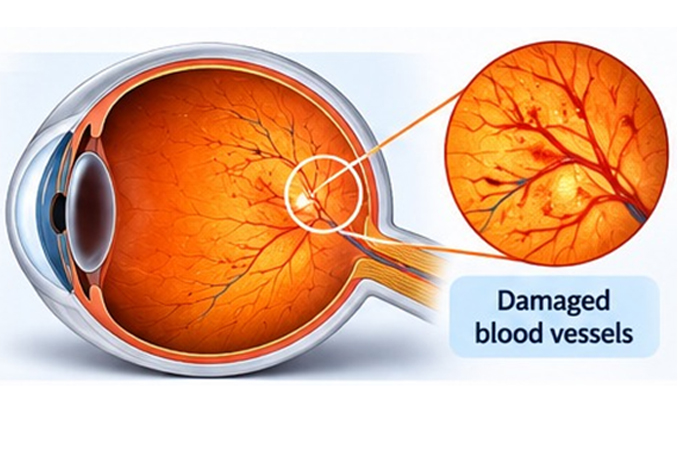
Diabetic retinopathy (DR) is an eye complication of diabetes. Persistently high blood glucose can damage the tiny blood vessels that nourish the retina—the light-sensitive tissue at the back of the eye. These vessels may weaken, leak fluid or blood, or become blocked. In advanced disease, abnormal new blood vessels can grow and bleed.
Anyone with type 1 or type 2 diabetes can develop diabetic retinopathy. It often affects both eyes. Timely screening and appropriate treatment can greatly reduce the risk of severe vision loss.
Why is it called a silent disease?
Early diabetic retinopathy often causes no pain and no noticeable change in vision. A person may see clearly while retinal damage is developing. Waiting for symptoms is unsafe: a dilated retinal examination can detect changes before vision is affected.
Signs and symptoms to watch for
As the condition progresses, symptoms may include:
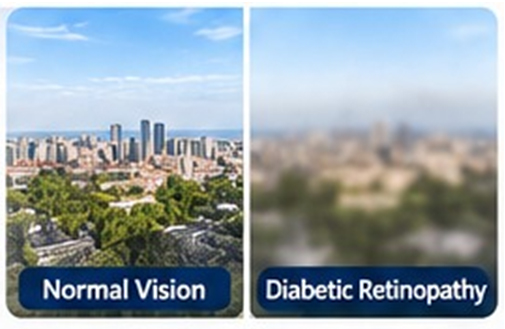
• Blurred or fluctuating vision
• Dark spots, specks or cobweb-like floaters
• Difficulty reading or seeing clearly at night
• Colours appearing less vivid
• A dark area or loss of vision
Sudden new floaters, flashes, a curtain-like shadow, or sudden loss of vision need urgent same-day eye assessment. Do not wait for a routine appointment.
Stages of diabetic retinopathy
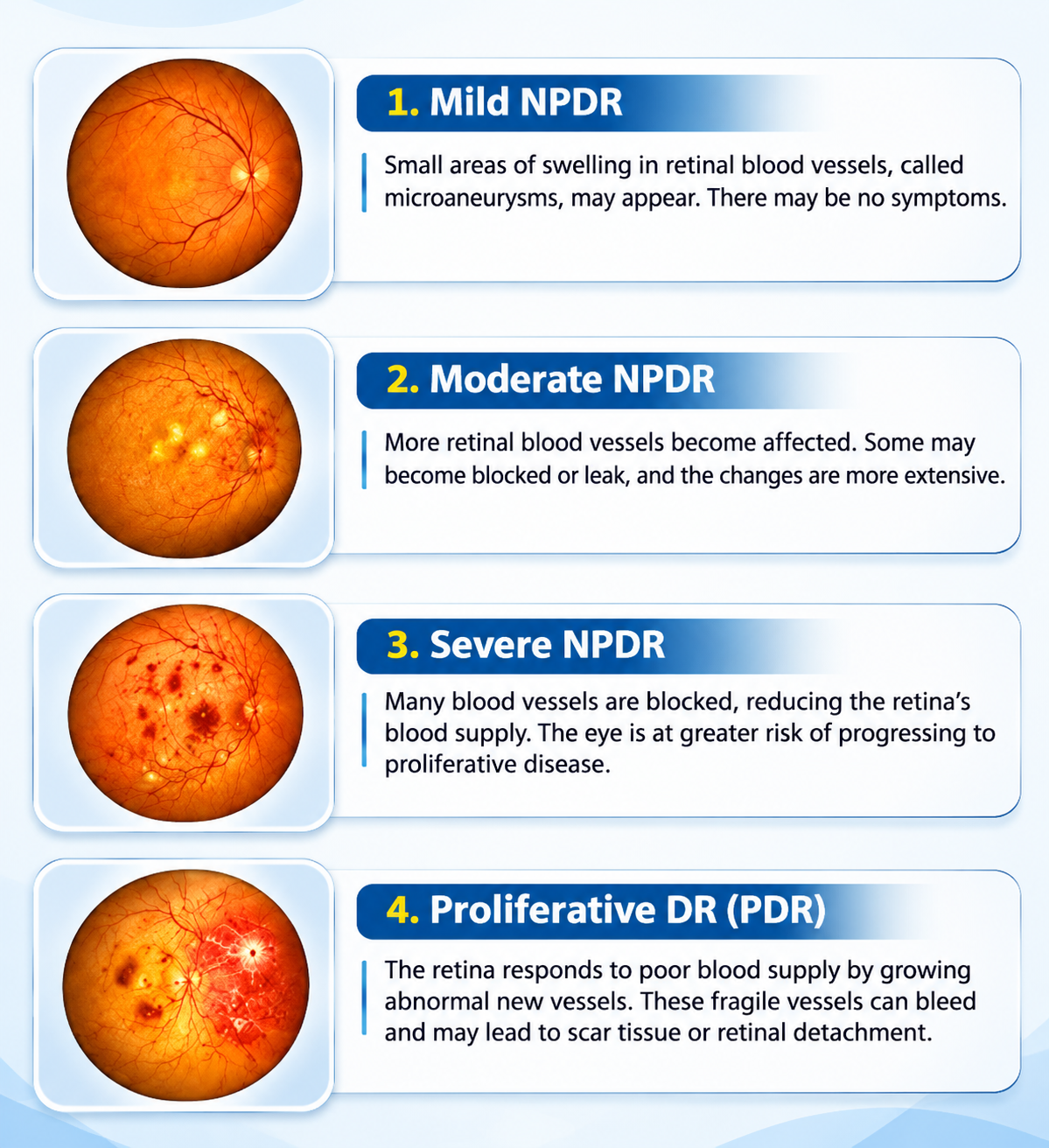
Retinopathy is commonly described as non-proliferative (NPDR) or proliferative (PDR). The stage helps the ophthalmologist decide how closely to monitor the retina and whether treatment is needed.
Diabetic macular oedema (DME)
At any stage, damaged vessels can leak fluid into the macula—the central part of the retina responsible for sharp, detailed vision. This swelling can blur central vision and may require treatment.
Who is at higher risk?
• Having diabetes for many years
• Blood glucose frequently above the individual treatment target
• High blood pressure or abnormal cholesterol levels
• Kidney disease
• Pregnancy in someone with pre-existing type 1 or type 2 diabetes
A person with good vision or apparently well-controlled glucose can still have retinopathy. Regular screening remains important.
How is diabetic retinopathy detected?
A comprehensive eye examination with pupil-dilating drops allows the ophthalmologist to examine the retina. Retinal photography may help document and screen for disease. Depending on the findings, optical coherence tomography (OCT) may be used to assess macular swelling, or fluorescein angiography to study retinal blood flow.
Many people with diabetes need an eye examination at least once a year. The exact starting time and follow-up interval depend on diabetes type, pregnancy status, previous retinal findings and individual risk. People with known retinopathy may need more frequent reviews. Follow your ophthalmologist’s schedule.. If you are looking for diabetic eye checkup in Gurgaon then you can contact Dr. Parul Sony MD (AIIMS) FRCS at her eye hospital Complete Eye Care.
Can diabetic retinopathy be prevented?
Not every case can be prevented, but good diabetes care can lower the risk and slow progression:
• Work with your diabetes-care team to keep blood glucose and HbA1c within your agreed target.
• Control blood pressure and cholesterol as advised.
• Take prescribed medicines regularly; do not stop them without medical advice.
• Eat a balanced diet, stay physically active and maintain a healthy weight.
• Avoid tobacco and attend scheduled retinal examinations—even when your vision seems normal.
What treatments are available?
Treatment depends on the type and severity of retinal damage. Some early cases only need careful monitoring and improved control of diabetes, blood pressure and cholesterol.
Anti-VEGF injections
Medicines are injected into the eye to reduce abnormal blood-vessel activity and/or macular swelling. A course of repeated injections may be needed.
Laser treatment
Retinal laser may reduce the risk of bleeding from abnormal new vessels or, in selected cases, treat retinal leakage.
Vitrectomy surgery
Surgery may be advised when there is significant bleeding into the vitreous, traction from scar tissue, or certain forms of retinal detachment.
Treatment can help prevent further vision loss, but it may not restore vision that has already been permanently lost. The best option depends on a detailed retinal assessment and discussion with the treating ophthalmologist.
A message for everyone living with diabetes
Do not wait for blurred vision to get your eyes checked. A routine retinal check can find disease early, when there may still be time to protect sight. Make your eye examination part of your diabetes-care plan.
References and further reading
• National Eye Institute — Diabetic Retinopathy
https://www.nei.nih.gov/eye-health-information/eye-conditions-and-diseases/diabetic-retinopathy
• CDC — Vision Loss and Diabetes
https://www.cdc.gov/diabetes/diabetes-complications/diabetes-and-vision-loss.html
• American Diabetes Association — Standards of Care in Diabetes—2026
https://doi.org/10.2337/dc26-s012
Patient education only — this article does not replace an individual examination or medical advice.